

A couple of weeks ago, I experienced two separate—but equally frustrating—data mishaps:
- I received a text and an email from the garage where we bought my wife’s car, reminding us that the MoT and service were due. Nothing unusual—except the garage is in Edinburgh, and we live in Nottingham.
- I received my annual MoT reminder from a local main dealer. Again, something you’d expect—except I sold that car five years ago!
When I’ve discussed these situations with people both inside and outside the automotive industry, the response is always the same: “That’s just how it is.” But should it be?
Why Isn’t There a More Targeted Approach?
With all the customer data available today, dealerships should be able to send more relevant and accurate communications. Yet, historically, even verifying something as simple as whether a customer still owns the car they bought has been considered too difficult.
What Happens Now?
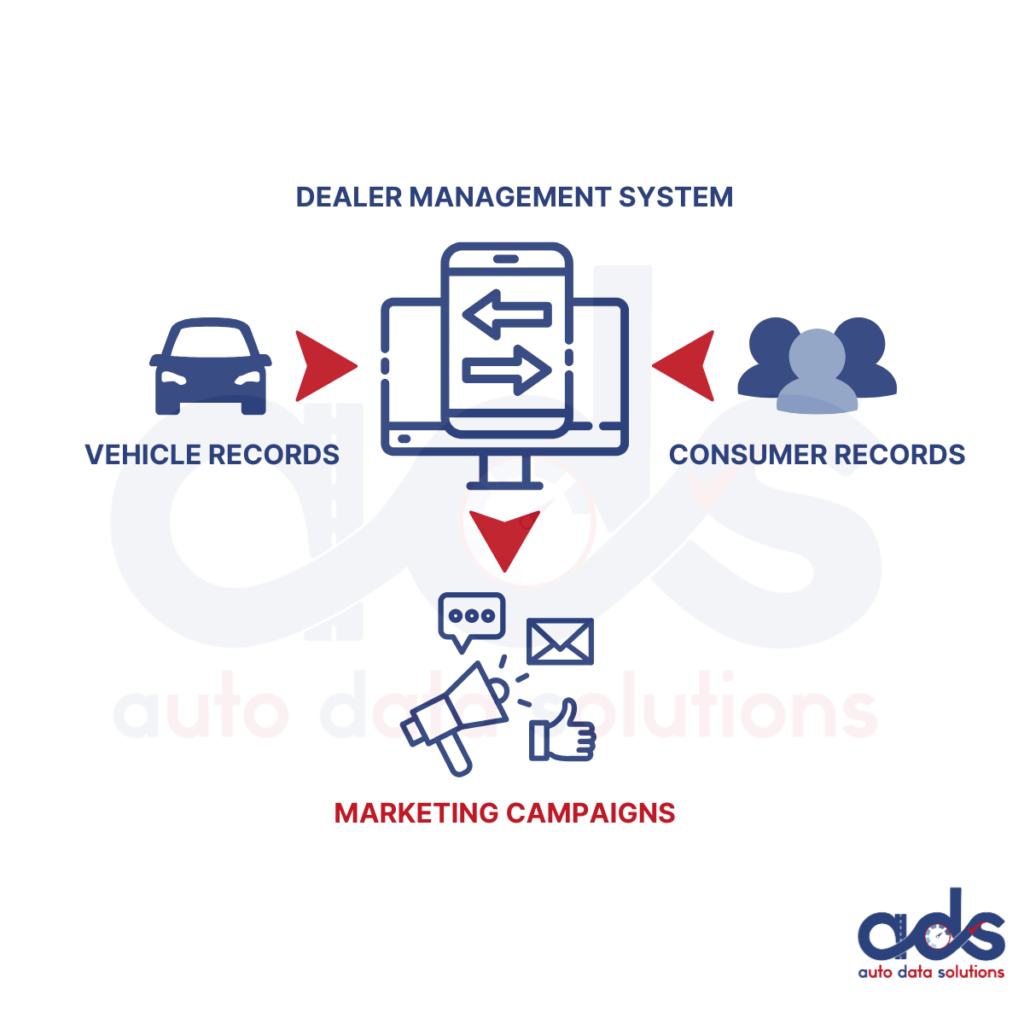
Most dealerships rely on their Dealer Management System (DMS) to extract customer and vehicle records for marketing campaigns.
- They target customers based on specific models they want to sell or launch a mass campaign—such as inviting customers for a winter health check.
- The same data is used for MoT and service reminders, usually based on the next recorded due date in their system.
While this approach provides some level of targeting, it falls short of true customer segmentation.
How could it work better?
Knowledge is power
Supermarkets cracked this years ago. Take Tesco’s Clubcard, for example. By tracking what and when customers buy, Tesco sends personalised offers based on shopping habits – encouraging customers to return and repeat their purchases. Today, almost every major retailer follows this model.
How many loyalty cards do you have in your wallet?
The key is data – and dealerships should be using it just as effectively. Unlike supermarkets, which see customers weekly, dealerships only interact with them occasionally.
That’s why having accurate, up-to-date data is even more critical.
Dealers should be able to answer:
- Do they still own the car they bought from us?
- Do they still live locally?
- How often do they bring their car in for servicing?
The Problem?
The dealers customer and vehicle data is often outdated and inaccurate.
The Solution?
Regular data cleansing and monitoring.
A Smarter Approach to Customer Communication
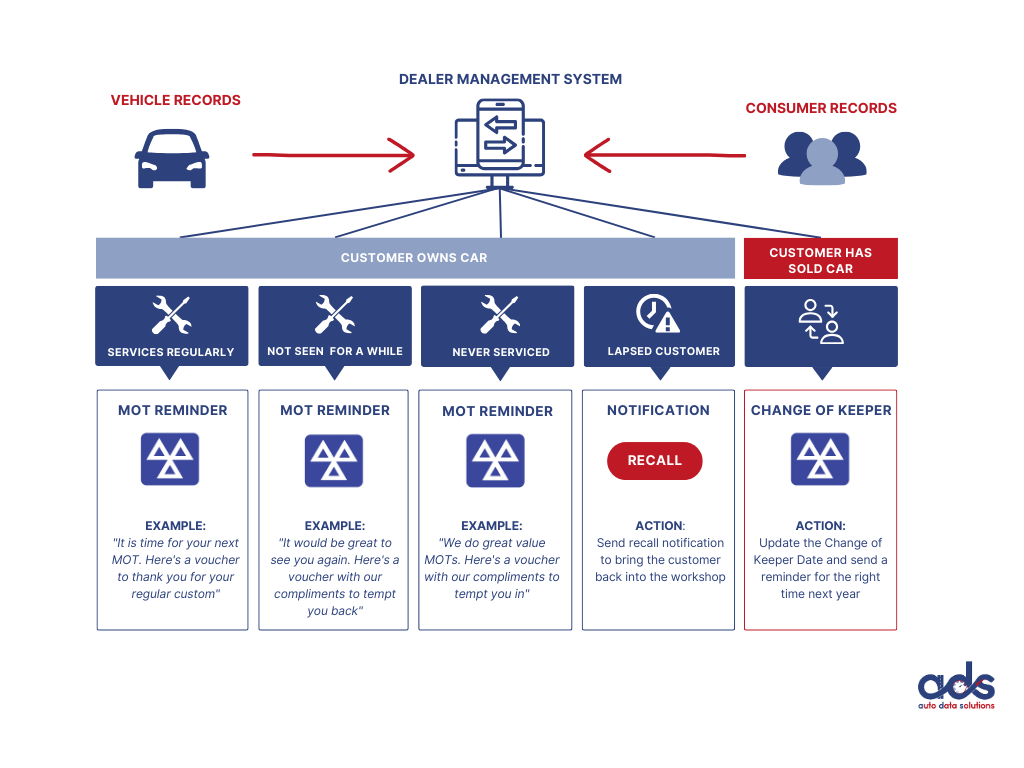
Rather than sending the same standard MoT reminder to everyone, imagine using customer segmentation to tailor messages based on accurate, up-to-date insights.
- The same MoT discount could be offered to all customers, but the messaging would differ based on their specific circumstances—just like supermarkets do with their personalised offers.
- If the dealer knows the customer has sold their car, they could use the Change of Keeper date to target them a year later, knowing their new car’s MoT may be due—assuming they still live locally.
This is how modern retailers operate, and dealerships should be doing the same.
Consider this model:
But Isn’t Data Cleansing Difficult and Expensive?
Not anymore!
Ask yourself: “What is the cost of NOT having accurate data?”
While an initial cleanse may cost £2,000, this can be spread over nine months, meaning dealers see the benefits before they even pay in full.
ADS is already working with major DMS providers to integrate both data cleansing and data monitoring into their platforms. Navigator DMS has gone live, and customer segmentation tools are being developed as we speak.
Data Cleansing – No Longer “Too Difficult”
For too long, data cleansing has been pushed onto the “too difficult” pile. But that’s no longer the case. With modern solutions, data updates run seamlessly in the background – without anyone in the dealership lifting a finger.
For years, dealerships have wanted to operate more like retailers – and data segmentation is a crucial part of that shift.